Unbalancing a Balanced Horse Feed Diet

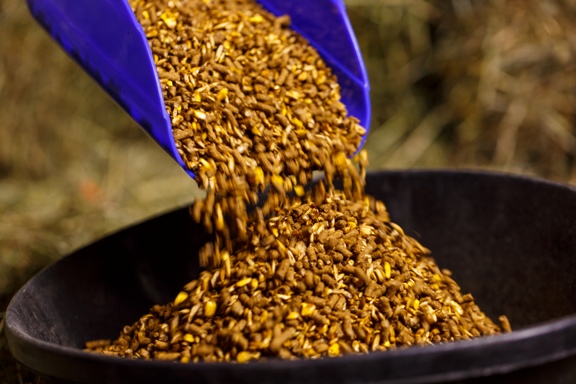
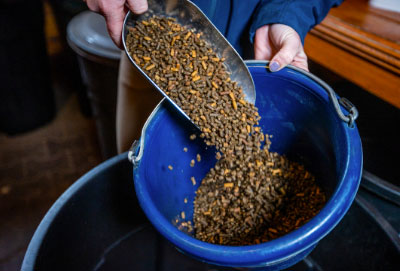
I was helping a colleague do a horse nutrition training seminar the other day and the question came up “Is it okay to supplement a commercial feed?” Specifically, this person was feeding half oats and half SafeChoice to her horse. My colleague had a great answer for this. He picked up a half full glass of Coke – “Pretend this is SafeChoice. Balanced perfectly to provide just the right things in the right amounts.” Then he picked up a pitcher of water – “Now pretend this is the oats. Not nutritionally balanced, low in protein and high in starch.” He started pouring the water into the glass until the mixture reached the top. The result was a watered down, light brown mess that looked unappealing and I am sure tasted the same way. The message here is simple – commercial feeds are formulated to be complete in their vitamin/mineral content, protein level, energy and fat levels. When fed at the recommended amounts per day based on work level you are meeting your horses’ nutritional requirements and delivering a specific and targeted amount of nutrients. There is no need to add/substitute/mix anything else. If you take that same feed and mix it (with things like straight grains, sweet cob, etc) – the result is an unbalanced feed that does not meet the needs of the horse. The protein gets lowered, the vitamin and mineral contents become diluted and things like calcium and phosphorous and copper and zinc can get out of balance. What you get is a diluted mess that is only doing half the job. To get the full benefit of a commercial balanced feed, use it according to tag directions and resist the urge to dilute it with anything else!

20 Comments

Posted in Changing Horse Feed, Feeding Management, Horse Feed, Horse Nutrition
Tagged as ,

When Should I Feed a Complete Horse Feed?

A complete feed is a fortified grain/forage mix that is formulated with high quality fiber sources to raise the total percent fiber in the feed, so that reduced hay feeding can be done safely. Some fiber sources in complete feeds include alfalfa, beet pulp, and soy hulls. These are all good digestible fiber ingredients for horses.

Here are some of the many reasons why you might decide to feed a complete feed.  

  • You have a horse with poor teeth or no teeth that can no longer chew and swallow hay. This can be a young or old horse.
  • Good quality hay is hard to find, obtain, or pay for. This situation will most likely occur in:
    • Drought situations when plants aren’t growing or they are very mature when they get tall enough to cut. When a plant gets too mature it has high levels of lignin that can’t be digested by the horse leading to digestive upsets or increased risk of colic. Plants also lose nutrient content the more mature they get.
    • Extremely wet conditions because it may be more mature by the time a farmer gets good weather to cut it and flooding can also bring debris onto fields that can be harmful to your horse.
    • Situatinos where hay gets more expensive as fertilizer and fuel costs rise.
  • There is a lot of hay wasted from handling, transporting, ect. More hay is wasted when horses are fed round bales. When hay is expensive and there is a lot of waste, complete feeds may be more cost effective.
  • Hay is hard to handle and round bales/large square bales require a tractor for handling and other equipment such as a flatbed trailer. Equipment requires fuel, tires, maintenance, ect. The cost of handling hay should be brought into consideration when cost is a major factor in feeding.

Long stem forage is an important part of the horses diet and a good source of forage should comprise of at least 50% of the horses daily intake when possible. However, when any of the above conditions exist it may be necessary to feed a complete feed only or reduce the amount of hay being fed. A horse that can no longer chew hay will need to get all of his daily requirements from a complete feed that is easy to eat such as a senior complete feed with softer pellets that can also be fed as a wet mash. If hay shortage, hay cost, or drought is the reason you feed a complete feed you may want to continue feeding some hay in the diet for long stem forage if possible.

It is important to read and follow the feeding recommendations when buying a complete feed, and they should list the recommended feeding amount both with and without hay on the tag. As you decrease the amount of hay, you will need to increase the amount of complete feed. Here are two examples of complete feeds and how much to feed a 1,000 lb maintenance type horse with no hay and with hay/pasture.

  • A senior horse feed – generally a highly digestible and highly palatable product that can be fed as a complete feed, and is designed for older horses. 
    • A 1,000 lb maintenance type horse would receive 12 – 14 lbs of a senior feed, if no additional hay is fed.
    • The same horse, if it was being fed hay, would receive 5 – 7.5 lbs of the senior feed.
  • A traditional complete horse feed – known as “hay replacers” or “hay stretchers” - are a complete feed that combines high quality roughage and grains in a pelleted form. It can be fed as a complete feed or with forage. 
    • If no hay is fed, a maintenance type horse would receive 1.5 lbs per 100 lb body weight. A 1,000 lb horse is recommended to get 1,000/100 = 10 x 1.5 lbs = 15 lbs of a complete feed.
      When feeding along with hay or pasture, a typical recommended amount to feed a maintenance type horse 0.5 lb per 100 lb body weight or 5 lbs.

Whether you chose to feed a complete feed with hay or without, it is important to feed the recommended amount and make adjustments as needed depending on if your horse is an easy or hard keeper. It is also important to provide free choice salt and clean, fresh water at all times. Complete feeds should be split into two or more feedings. Horses should be switched slowly from one feed to another and also when eliminating hay from the diet. When reducing the amount of hay fed, it is recommended to reduce hay over 1-2 weeks.

Your thoughts? Please leave a comment.

Posted in Changing Horse Feed, Feeding Management, Hay/Pasture, Senior Horses
Tagged as , , , , ,

Managing The Horse With Cushing’s

The vet has diagnosed it and the reality begins to sink in – your horse has Cushing’s disease. Now what?  Cushing’s is an endocrine disease caused by a tumor on the pituitary gland that is most often seen in older horses and ponies. This tumor results in high cortisol and is most often exhibited by  hyperglycemia (high glucose), excessive thirst, excessive eating, excess urination and a shaggy haircoat.  At this time there is no cure for Cushing’s but by keeping a close eye on nutrition and management, we can improve the quality and possibly lengthen the life span of a Cushing’s horse.

Routine is important to the Cushing’s horse because changes in diet, medication, etc. can have negative effects on health.  Cushing’s horses have a compromised immune system and for that reason, seemingly small or mundane parts of their care become very important.  There are a few management practices that are particularly important: 

  • Deworming – Cushing’s horses can be more susceptible to parasites because of their weakened immune system.  Work closely with your vet to develop a deworming schedule and program that is catered to your horse. Your vet should also be seen regularly for dental care and wellness exams.
  • Farrier Care- Regular farrier visits are important because certain types of leg and foot conditions are more likely with a Cushing’s horse, such as abcesses of the hoof and laminitis. Signs of laminitis can be a tender footed stance and the horse acting like he is “walking on egg shells”. 
  • Grooming – Hair coat and temperature regulation are problems in Cushing’s horses so you will want to help your horse as much as you can by preventative grooming practices. Consider body clipping in hot/humid weather and be mindful of temperature and weather changes. When blanketing, make sure the hair coat is dry and clean to help reduce the incidence of skin issues. Prompt treatment of any wounds or infections is essential.
  • Feeding- One of the main goals in feeding the Cushing’s horse is to control the starch + sugar (NSC) content per meal. This helps to regulate the blood glucose and insulin levels.  The NSC content of the concentrates fed to the horse is important, but even more so is the content of the hay /forage and the combination of the two together. Some guidelines have suggested an NSC maximum value of 10-13% based on the total diet (forage + concentrate). Testing your hay will give you a good idea of the NSC values.
  • Consider a feed that is fortified with lysine, methionine, biotin, vitamin E and complexed trace minerals (copper, zinc, manganese and selenium) to help maintain muscle mass, support hoof growth and support the immune system.

Following these tips will help improve the quality and possibly length of life for the horse diagnosed with Cushing’s.  If you have specific questions regarding your horse, please work with a qualified nutrition consultant or your veterinarian.

1 Comment

Posted in Care and Management, Diseases and Disorders, Feeding Management, Horse Feed, Horse Nutrition, Senior Horses
Tagged as , , , , ,

Feeding “George”: A Polysaccharide Storage Myopathy (PSSM) Horse

Previously, I introduced you to George, my ‘Heinz-57’ PSSM positive horse.  Though his test results came back positive for Type 1 PSSM, his diagnosis does not mean his athletic career is over. With some diligence and routine, George is able to lead a normal life as a successful working partner.

One key to managing his condition is maintaining consistency in his diet and routine. Remember, he would get sore every time the hay changed, particularly if it had alfalfa in it.  First I work to ensure that George’s total diet is properly balanced which starts with controlling the starch and sugar energy sources in his hay and grain ration.  I buy larger quantities of grass hay (no alfalfa) that will last awhile, a full year if possible. I also have my hay tested before buying it to make sure it isn’t too high in non-structural carbohydrates (12% NSC or less), and that the rest of the nutrients are within an acceptable range for good quality hay, as this is the bulk of his diet. The lower the NSC in the hay, the more room there is in the diet to add calories from fat. More on that below.

To balance his hay, he gets a controlled starch feed concentrate that is fortified with essential amino acids, complexed trace minerals, pre- and probiotics.  If I need to add calories to his diet to support higher levels of exertion during training and show season, I add a balanced fat supplement to the concentrate component of his diet.  To meet the total caloric requirement it is recommended that PSSM positive horses receive no more than 10% of the digestible energy from non-structural carbohydrates (starch and sugar), and 15-20% of the digestible energy should be supplied by fat.  Remember, this applies to the total diet, contributions from grain plus forage.  Working with a qualified equine nutritionist is a great way to figure all of this out.  In a nutshell, I control the sugars and starches in his total diet (low NSC grass hay and low calorie, controlled NSC grain) and add a nutritionally balanced fat source when extra calories are needed. The only supplement he gets is vitamin E, which helps boost his antioxidant status (helps fight oxidative stress), and supports muscle recovery after exercise.  Because his total diet is balanced for selenium, I don’t supplement this mineral to avoid potential toxicity.

Estimating his weight and doing a regular body condition score help me adjust his diet and exercise routine accordingly, so he maintains good muscle mass and avoids excess fat deposits.  In addition, I make sure to minimize stress as much as possible by keeping his routine consistent.  His daily ration is divided up into 3 meals to avoid one large grain meal and he has access to hay for most of the day.  He gets a minimum turnout of 8 hours every day with a buddy and limited access to fresh forage.  I also exercise him at least 6 days a week.  With this management routine, regular veterinary and farrier care, he has never “tied-up” on me, and continues to excel in dressage with the occasional hunter pace thrown into the mix. Providing good quality of life is a top priority, especially when it comes to managing even the most challenging horses, and I think George would agree, he is doing great!

4 Comments

Posted in Care and Management, Changing Horse Feed, Diseases and Disorders, Feeding Management, Horse Feed, Starches & Carbohydrates
Tagged as , ,

Meet “George”: A Polysaccharide Storage Myopathy (PSSM) Horse

I’m proud to introduce you to George, a “Heinz-57” draft cross, and my current equine partner.  He is the result of a ½ Thoroughbred, ½ Percheron (dam) x ½ Hanoverian, ½ Paint horse (sire). I’ve had the privilege of knowing George since he was a weanling, and bought him as a yearling.  It wasn’t until I started him under-saddle as a three and a half year old that I started noticing behavioral changes (crankiness – not like George), non-specific muscle soreness, and a transient, almost undetectable gait abnormality, all of which happened to be associated with new hay delivery.  I won’t mention how much I’ve spent having him worked-up, imaged, adjusted, fitted and many more things to get to the bottom of what his body was trying to tell me.  We were coming up empty handed and frustrated.

It wasn’t until after I returned from an equine nutrition symposia that it occurred to me to have him tested for polysaccharide storage myopathy (PSSM). PSSM causes the horse’s muscle cells to store energy (glycogen) in excess, which can result in a variety of symptoms, the most severe of which is tying up after aerobic exercise.  Nearly all of the classic signs were there, short of a bad tying up episode.  Wouldn’t you know it, he came back positive for Type-1 PSSM a.k.a. EPSM, tying- up syndrome/exertional rhabdomyolysis/Monday morning disease, set fast or azoturia.  There is more than one version of PSSM (Type-1 is most common) and the diagnostic tests for each are unique.

Recent advances in equine genetics have made testing a blood, muscle, or hair follicle sample possible.  As it turns out, three of the four breeds that George represents have been identified as prone to carrying the genetic mutation responsible for PSSM.  Unlike some other recessive genetic diseases, PSSM is inherited as a dominant gene; in other words having just one copy of the mutated gene means the horse has the disease.  Horses lucky enough to inherit 2 copies of the gene can be more severely affected.   The good news is, with a little diligence, these horses can be managed and go on to have a good quality of life and successful athletic careers; both of which I want for George. 

Diagnostic information can be found at the University of Minnesota Neuromuscular Diagnostic lab website: http://www.cvm.umn.edu/umec/lab/home.html

3 Comments

Posted in Care and Management, Diseases and Disorders, Feeding Management
Tagged as , , ,

Prevention and Management of EMS in Horses

There is no treatment or cure for Equine Metabolic Syndrome (EMS), so taking preventative measures though diet and exercise are the best defenses against the development of EMS. 

Crinkles on Toby's neck are evidence of his 'overweight' status

Here are some great defensive strategies to help prevent your horse from developing EMS:

    • Prevent obesity by providing a forage-based nutritionally balanced diet with controlled starches and sugars.
    • Maintain an optimal body condition through regular exercise.
    • Work with an equine nutritionist or veterinarian to understand what a healthy weight and body condition is for your horse to help prevent over-feeding or dietary imbalances that can contribute to EMS.

 For horses who already are dealing with EMS, follow these tips to help successfully manage their condition:

    • Prevent or reduce obesity through controlled starch and sugar in the total diet along with exercise (unless horse is painful from laminitis episodes).
    • It is recommended that these horses have very little to no access to fresh pasture to avoid the overexposure to the sugars in grass.  Use of grazing muzzles or a dry lot are good alternatives to stall confinement, as this allows the horse to exercise on its own.
    • Have a nutrient analysis done on your hay to understand the NSC content – keeping in mind that it is important to understanding to NSC content of the total diet (hay + grain, if applicable). 
    • Soaking hay (15 – 30 min warm water) can help leach out some of the sugars in the hay, just be sure to feed the hay right away before it spoils, and discard the sugar waste water, so the horse does not have access to it. 
    • Low calorie ration balancers are good horse feed options to balance the diet if there are vitamin and mineral deficiencies from feeding a forage only diet, and/or from soaking hay.


Your thoughts? Please leave a comment.

Posted in Care and Management, Diseases and Disorders, Starches & Carbohydrates
Tagged as , ,

What is Equine Metabolic Syndrome (EMS)?

EMS is an endocrine (hormonal) disorder in horses, similar to metabolic syndrome in humans, that is characterized by obesity, insulin resistance, and regional adiposity (abnormal fat deposits), which can predispose affected horses to chronic  laminitis.

What types of horses are affected? 

First and foremost, most horses do not suffer from EMS.  Most horses tolerate dietary carbohydrates (e.g. NSC, starch, sugar, fructan) quite well, and thrive on this important and readily available source of energy.   Performance horses in particular need sufficient NSC in their diets for work and recovery after exercise.  Too little starch and sugar in the diet can actually diminish athletic performance over time in non-EMS horses.

Tess the pony indulges

That being said, EMS can occur in any breed, however ponies, Morgans, Paso Finos, and horses that tend to be “easy keepers” seem to be most vulnerable to developing EMS.  It should also be noted that not all obese (fat) horses are insulin resistant, and not all insulin resistant horses are fat.

How do I know if my horse is insulin resistant (IR)?

Veterinary diagnostic testing (blood work) is recommended to confirm IR, but here are some other classic signs of insulin resistance in horses and ponies:

  • A classic sign of IR is a “cresty neck”, of which a clear correlation between neck circumference and IR has been documented.
  • Horses with regional deposits of lumpy or dimpled fat pads (e.g. behind the shoulder, around tailhead, over the loin), are suspect of being IR.
  • Horses that seem to gain weight rapidly, or blow up easily, particularly in spring with new pasture growth, relative to other horses may indicate IR.
  • Horses that are tender footed, and/or that demonstrate rings on the hoof wall, expanded white line and blood spots on the soles of their feet,  suggests mild, chronic bouts of laminitis and IR.

EMS is easily confused with other clinical disease such as Cushing’s Disease (a.k.a. pituitary pars intermedia dysfunction) and hypothyroidism due to similar clinical signs, despite different underlying causes.  It is very important to work with a trusted vet to ensure an accurate diagnosis if any of these conditions are suspected.

A word of caution, single blood samples for the diagnosis of IR can be very unreliable and misleading as several factors unrelated to EMS influence glucose and insulin levels (time and content of horse’s last meal, type of feed horse is adapted to, time of day sample is collected, stress level of horse), leading to false conclusions.  Taking multiple blood samples over several days, or utilizing techniques such as the euglycemic insulin clamp or a combined glucose insulin tolerance test (CGIT) are more involved, but can lend more validity to the lab analysis.  In any case, early detection of EMS and other endocrine disorders is preferable.

3 Comments

Posted in Diseases and Disorders
Tagged as , , , ,

B-Vitamins in Horse Diets

Water soluble vitamins, which are the b-vitamins such a niacin, thiamine, folic acid, and many others, are excreted from the body on a daily basis in the urine.  B-complex vitamins play an important part in allowing horses to metabolize the nutrients contained in feedstuffs, by facilitating carbohydrate, fat and protein utilization within body cells, providing the energy needed for growth, performance and reproduction. All of the B-complex vitamins are essential to horses, but they are synthesized by bacteria in the cecum and colon. After microbes form the vitamins, they are absorbed through the intestinal wall and are available for use by the horse’s body cells. Bacteria in healthy adult horses generally produce adequate levels of the B-complex vitamins.

Since bacteria in the horse’s digestive tract produce B vitamins, several factors influence the B vitamin status of horses. Changes that affect the bacterial population may change the synthesis and availability of B vitamins, and they include, but are not limited to:

• Drugs, which selectively kill certain species

• Horses going “off feed” thus reducing the availability of food for the bacteria

• Dietary changes which change the levels of fiber, carbohydrate and protein passing to the bacteria in the hindgut

In addition, situations that decrease the horse’s ability to absorb B vitamins have an effect on overall vitamin status include:

• Chronic or clinical diseases that interfere with efficient metabolism by the horse

• Parasitism, through ulceration of the mucosa and direct competition for vitamins in the feed, causes reduce availability

• Diarrhea bouts reduce B vitamins for the horse

• Moldy feed, especially hay contaminated by Streptomyces, makes biotin unavailable for horses

• Stress tends to decrease the horse’s ability to absorb B vitamins

• Anti-metabolites present in plants such as bracken fern, yellow star thistle or horsetail, interfere with thiamin utilization and transport

Finally, information on the B vitamin requirements and synthesis in young, growing horses and performance horses is limited. While there is much anecdotal evidence available about the effects of supplementing b-vitamins to horses, few actual research studies have been completed to determine the actual results of such supplementation, positive or negative.

2 Comments

Posted in Feeding Management, Horse Feed, Horse Nutrition
Tagged as ,

Feeding Tips for Stall Rest

Regardless of the diagnosis, when stall rest is on the treatment list, adjusting your feeding program to match your horse’s lack of activity can improve the experience for both you and your horse.

Horse on stall rest

As a curious 2 year old, Toby injured himself and landed in stall rest-land.

Whether recovering from an injury, surgery, or other, stall rest is generally prescribed to limit the movement of your horse to aid in the body’s natural healing process.  Often times, when a horse’s activity level moves from work or competition to that of quiet stall rest, it takes a period of adjustment for him to settle into the new routine. 

Altering his feeding program to match this now sedentary lifestyle will help him make the transition.  Please note: all feed and forage changes should be made gradually through a period of 5-7 days so as not to disrupt the digestive system.

For the horse sentenced to a period of stall rest, the name of the game is energy management.  If he is an athlete who is used to getting high calorie feed and plenty of exercise, transition him to a low calorie feed or ration balancer, with a high quality grass forage.  Reducing the energy he receives from his feed will help manage his weight and behavior.  

Selecting a feed that is balanced for amino acids will offer the body aid in the development and repair of tissues, especially muscle and connective tissue. Fortified, balanced levels of vitamins and minerals will aid in immune response as well as minimize bone density loss.  Feed that is fortified with prebiotics, such as yeast culture, and probiotics can aid in the balance of the gut bacteria, overall absorbtion of nutrients and supports the immune system. Omega 3 fatty acids in the feed can also provide support for the immune system as well as help manage inflammitory response in tissue. 

Monitor his body condition score and weight throughout stall rest and make feed amount adjustments as needed.  If he begins to gain weight, reduce his feed amount to the lowest advised amount from the feed manufacturer. 

If he drops too much weight, slowly increase the feed amount, making sure to stay within the feeding directions.  Increasing the amount of hay can also provide benefits, though keep watch that he doesn’t start wasting.  Health complications or hay quality concerns aside, uneaten hay is an indication that he is being fed too much per meal.  

In addition to providing much needed fiber and calories, hay in the stall can also provide a distraction,  curbing destructive behavior such a cribbing, weaving and pawing.  Consider providing stall toys, such as a ball or treat roller to keep his mind occupied and prevent bad stall habits from forming.

Pending the doctor’s orders, hand walking is a common method of providing limited exercise while reducing the chances of further damaging the injury or wound.  Hand walking is also a great way to spend time with your horse, especially if stall rest has taken him away from his normal job.  

Once the period of stall rest is completed and he goes back to ’work’,  transitioning his feed back to the ‘normal’ energy levels should be done with even more caution than transitioning the energy down.  For advise on your specific situation, please discuss with a qualified feed consultant or your veterinarian.

2 Comments

Posted in Care and Management, Changing Horse Feed, Feeding Management, Horse Feed, How To
Tagged as , , , , , , ,

Using Hay Replacers for Horses

Severe drought through parts of TX and OK leaves hayfields and pastures brown and dry, and animal owners searching for replacement options.

When times of severe draught or other weather phenomenon result in poor quality or availability of pastures and hay, horse owners often turn to complete feeds (i.e. feeds that contain a full diet of roughage, protein, vitamins, minerals, and other needed nutrients) or hay stretchers/replacers (designed to replace the fiber component of the hay/pasture that is no longer available).   These products can be extremely useful to horse owners to help them through the tough hay times, but they do come with some usage guidelines to keep horses happy and healthy.

  • Follow the recommended feeding rate.
    • This is of particular concern if the product is being used as the sole diet.  To keep gut health intact, enough fiber must be consumed each day for regular gut function.  And, to keep the horse healthy overall, it is critical to ensure they are receiving all the balanced nutrients that they would normally get through a combination of hay, pasture, and added concentrate feed.
  • Horses tend to crave long stem fiber to chew on, which is missing in the diet made up of complete feed or hay stretchers. 
    • Owners will most likely see unwanted behaviors begin, such as wood chewing, cribbing, or weaving, without some grass or hay to keep their horse’s mouth and mind busy.  While the full daily allotment of hay may not be available or affordable, it is a good idea to offer at least a flake or two each day to help prevent these behaviors (and save your fences).  Hay cubes are an option if pasture or traditional baled hay is unavailable.
  • Ensure proper water and salt consumption.  Proper hydration levels are essential to keeping the gut moving properly.

In the absence of available forage, providing a complete feed concentrate is a better option than feeding a concentrate that is designed to be fed with forage, by itself.  With proper management and attention to detail, both the horse and the owner’s pocketbook can pull through the hay shortage!

8 Comments

Posted in Feed Costs, Feeding Management, Hay/Pasture, Weather-Related Feeding
Tagged as , , , , ,