Warm Mashes for Senior Horses

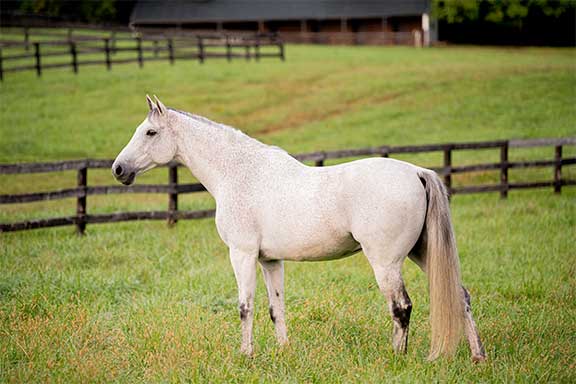
Gayle's 32 Year Old Arabian, "Radar's Count"

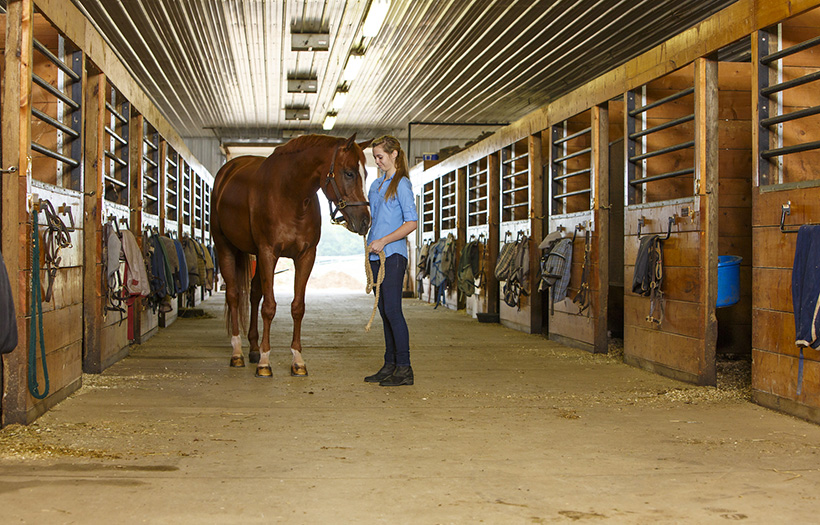
I received an email from one of my clients asking for a recipe for a “Safe Warm Mash” for her senior horse.   She thought a bran mash would be a good choice, but was unsure as to ingredients or cooking instructions.  The particular horse is 23 years old and a body score of a solid 6. He is showing some early signs of Cushing’s disease. His current diet is grass hay and Nutrena’s Life Design Senior horse feed, as well as daily pasture turnout.

I have never understood why so many educated consumers, that take the time to transition a horse gradually from one feed to another over 5-7 day period would want to take this chance.  A one meal change in a horse’s diet may not cause colic or founder, but it can cause enough of a change in the microbial balance to cause diarrhea or gas, especially in a senior horse.   The fact that the calcium and phosphorus ratios in bran are also so out of balance for horses makes me uncomfortable, as we strive for a 1:1 or 2:1 ratio of calcium to phosphorus, not 1:12 as is in bran.   This is important for proper metabolic function and to maintain bone integrity.

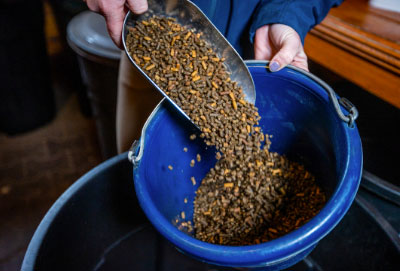
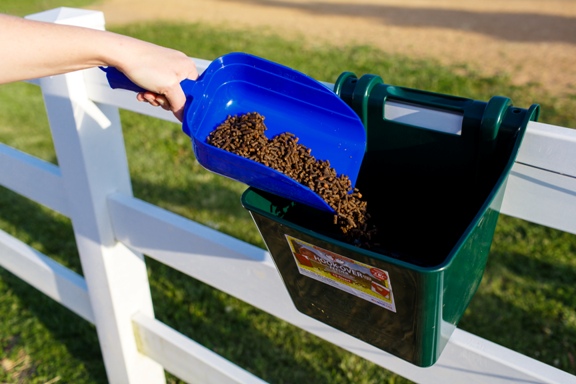
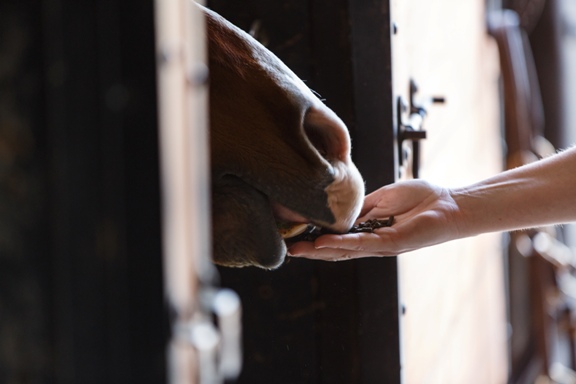
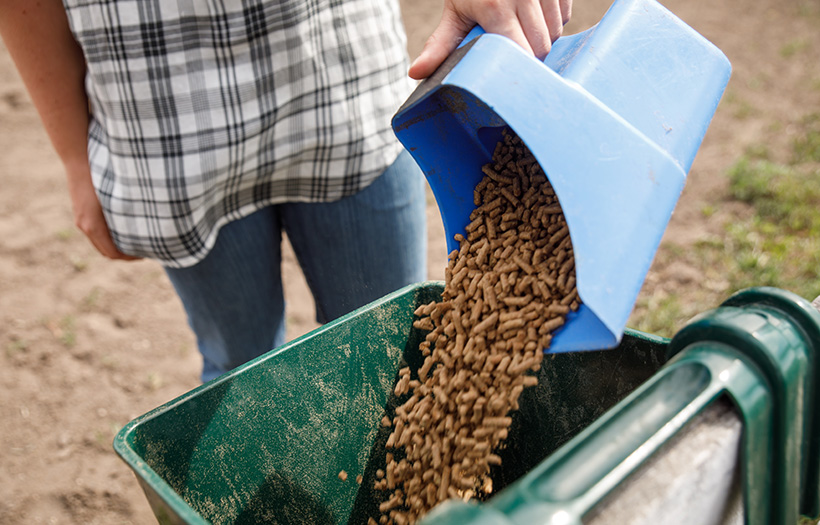
The good news is that there is a safe alternative to making a bran mash!  I contacted my client and told her that she already had the ingredients to make a mash for her horse – his senior horse feed - and the most important nutrient in a horse’s diet – water.  Senior feeds are high in fiber, as well as properly fortified with calcium and phosphorus.  By simply soaking a serving of her horse’s senior feed with warm water for 5-8 minutes until it reaches a consistency her horse will enjoy, she will have a nice warm mash for her senior horse.

This entry was posted in Care and Management, Changing Horse Feed, Feeding Management, Horse Feed, Senior Horses.
Tagged as , .

12 Responses to Warm Mashes for Senior Horses

  1. kim moudy says:

    this is good info. I have a senior appy mare (29 yo), and the vet as well as the feed store have helped me in getting correct portions in feeding her. Her weight, body, coat, and spirit have all turned for the better. I do wet her food, just a bit, and also give her free range with loose minerals. I am a big fan of Nutrena Senior.

    • Natalie says:

      Kim that is so cool. I have a senior appy gelding also (29yrs). And I did the exact same thing that you did. Now my senior friend has gained weight, his coat looks fantastic and he is now out playing with the younger horses.

  2. Linda Clark says:

    It tells you on the bag to soak it with warm water. I have a 34 yr. old that has been eating Nutrena Senior for several years. When she started losing condition, I started putting warm water on it and her condition came back.

  3. Roxanne says:

    I add beet pulp shreds and alfalfa cubes to the Nutrena Senior for the evening feeding. I just add warm water and let everything soak while doing the rest of the chores. My old gals just love it.

  4. Mary Watkins says:

    I did just read a report from Kentucky Equine Research this month, about bran mashes. Researchers do agree about the digestive upset, it seems to be quite common. Many scientists agree about the negative effect on the gut microbes, too.

    Regarding calcium/phosphorus levels, the report does state an occasional bran mash will not upset body-wide mineral levels. But, wheat bran offers little in the way of nutrition.

    Roxanne’s use of beet pulp is supported by the report. It is identified as a better source of fiber than wheat bran.
    Roxanne’s use of soaked alfalfa cubes is a better nutritional offering than wheat bran, also.

    Beet pulp is a relatively good source of calcium and calories and is very low on the glycemic index.

    I wonder what is in Nutrena Life Design Senior? (I understand the ingredients vary depending on the region a mill is located. And, I’m not sure if feed mills must list the ingredients in descending order of weight.) Let’s see what I can find, for ingredients…

    First ingredient listed (on one example): Wheat Middlings (Wheat middlings or wheat mill run, stated by AAFCO, is coarse and fine particles of wheat bran and fine particles of wheat shorts, wheat germ, wheat flour and offal from the “tail of the mill”.) Hmmmmmmm.

    • Emily L. says:

      Dear Mary, Thank you for your great questions, and your enthusiasm around this topic!

      When you get down to it, horses do not have ingredient requirements, but rather need certain levels and combinations of nutrients (carbohydrates (starch/fiber), fat, amino acids, vitamins, minerals, water). Nutrena uses different ingredient combinations to meet the specific nutrient requirements of the animal. For example, horses don’t have a requirement for corn or oats, instead what their body needs and recognizes is the levels of fat, fiber, starch, etc that those ingredients provide. So, it’s not really a change in ingredients that causes upset, it’s a change in the level of nutrients provided by the ingredients used. Sudden changes in nutrient levels such as fiber and starch can result in gastrointestinal upset which manifests itself as mild diarrhea to gas colic, neither of which are desirable. Feeding horses with consistent, balanced nutrients in mind can go a long way in supporting our horses (gut) health, and overall well being.

      In regards to your comment about Life Design Senior, that product has a balanced formula designed to meet the nutrient requirements of horses, specifically the unique requirements of our older equine companions. The use of wheat midds in our Life Design Senior formula is only one ingredient of many that provides complete and balanced nutrition to the animal if recommended feeding directions are followed. The nutrient content and balance of the total diet must be considered. Just focusing on one particular ingredient does not tell us the whole story. Sure, wheat bran/midds/flour/shorts alone do not contain balanced nutrient profile for horses, and it would not be recommended to feed this single ingredient alone to meet the nutritional requirements of horses. But, when you consider the nutrient contribution of wheat bran/midds/flour along with all of the other ingredients in that formula, you will find that it adds up to a high quality balanced ration.

      To answer your question on ingredients changing by plant, the reason that ingredient profiles may shift a little is to provide flexibility in achieving the proper nutrient levels, with the understanding that nutrients within individual ingredients can vary quite a bit and certain ingredients may be more readily available in a particular region as compared to another. If a fixed or locked ingredient formula were used, this would take away the ability to account for nutrient variation within individual ingredients. For example, the protein content in alfalfa or oats can vary significantly from one batch to another, and if the formula ingredients are locked, this can compromise the consistency of nutrition the horse experiences, even though the ingredients are the same.

      For Roxanne, her use of soaked hay cubes and beet pulp provide good sources of fiber in the diet and compliment the nutrient content of Life Design Senior.

      I hope this is helpful to you. Please let us know if we can answer any other questions!
      Thank you ~ Emily L.

      • Soraya says:

        I have to disagree with the statement “So, it’s not really a change in ingredients that causes upset, it’s a change in the level of nutrients provided by the ingredients used.” One thing that the Nutrena spokesperson has not mentioned is that different ingredients have different digestibilities, so unless the two ingredients that are exchanged for one another have *identical* digestibility, a change in ingredients does indeed change nutrient availability to the horse, something that is not always reflected in the label. Reading a label that only states crude protein or crude fiber %s is useless – that is just the result of an analysis that tells you what is present, not what will be absorbed.

        Another important factor that is not always fully disclosed in labels is the type of carbohydrates in the feed: cellulose and hemicellulose are structural carbohydrates located in the plant’s cell walls) versus sugars and starches, carbohydrates found inside the cells, also known as non-structural carbohydrates. Grasses, legumes and hays made from these have low starch + sugar %s, with total NSCs in the low teens. Wheat middlings average starch % in the mid 20s, with total NSCs in the low 30s. Taking a cue from nature, keeping NSCs closer to what horses used to eat before domestication promotes healthier hindgut bacterial populations and less GI problems. There is an association between high NSC feeds and colic & laminitis in horses that are overweight.
        “If a fixed or locked ingredient formula were used, this would take away the ability to account for nutrient variation within individual ingredients.” Not so; you could either bring ingredients from elsewhere – Canadian & Western hay is shipped all over the place just so you can feed alfalfa or timothy hay if you wish to do so. It *does* increase the price, and that is a far heavier consideration for people who mill or feed a ration where ingredients can change from batch to batch without any indication of the changes made evident in the label.
        Talk to your extension agent about feed analysis – they do not have an interest in representing one feed brand over another – they’ll just give you facts or refer you to someone else who can that is without bias.

        • Roy J. says:

          Thank you for your comments and observations. In an ideal management system, the horse owner would have access to a very consistent forage source which did not have significant variation and the concentrate portion of the diet would also not have any variation as horses do indeed like consistent nutrient flow.

          Unfortunately, the significant variation in forage from field to field and from cutting to cutting makes that quite difficult. This is even more difficult for the owner who buys limited quantities each time and does not have each purchase tested.

          As you are very aware, the nutrient content of fairly uniform grains such as oats, barley and corn also varies greatly from location to location and even within a field. The database at http://www.Equi-Analytical.com, one of the better public data bases, certainly shows that variation.

          A supplier that uses a fixed formula could indeed reduce nutrient variation if they sourced ingredients from different areas and had the ingredients tested before they were delivered to the plant so that they could use very similar ingredients all the time. Unfortunately that is not a common practice in the industry due to the logistics and cost involved and would increase the cost of the feed substantially and would probably not be considered very environmentally friendly. If you are making a breakfast cereal and selling it for $3-4,000 per ton retail, this is feasible and is quite common in the food industry. This may explain why a box of breakfast cereal costs what it does in a grocery store?

          We understand and agree completely that different ingredients have different digestibility coefficients for different nutrient fractions. The digestibility is also different for each species. We (and we trust other feed companies)have a very detailed proprietary set of equations in our formulation system to adjust ingredient use based in part of the species digestibility measurements for major nutrient fractions in each ingredient. There are also quite a number of nutrients that have minimums and maximums in feed formulation beyond what is conveyed on the tag, including but not limited to NDF and ADF, to manage some of the carbohydrate fractions. We are continually working to improve our accuracy in this area as we believe it is key to providing consistent nutrient flow.

          The feed and nutrition industry has made substantial progress in the last few years in adjusting energy sourcing and nutrient content for the intended use of the horse. When we look at how horses are managed in confinement and for specific performance demands, we appreciate that this is not the same as the horse roaming in a natural environment. Many horse owners would also probably not find the body condition changes that take place under range conditions and the productive life span of horses on the range to be completely acceptable.

          Cool season grasses under specific growing conditions are the highest source of fructans and perhaps the most variable source due to the impact of growing conditions. Fortunately, these are not commonly used in feed formulation as they are not commonly harvested for ingredient use in the same manner as say alfalfa or beet pulp.

          Utilizing extension agents expertise in feed analysis, particularly forage, is something we routinely and strongly encourage horse owners to do to help them manage their animals. A very good survey conducted by Dr. Noah Cohen suggested that sudden changes in forage was closely associated with the incidence of colic. Most horse owners will try to make concentrate changes gradually, but may change forage in one day if they have to change sources.

          Sincerely,
          Roy A. Johnson

  5. stephanie says:

    I have a 25 yr old diagnosed cushing mare. I found senior feed to be too high in sugars for her as a cushings horse. I had her teeth done they are fine, I added beet pulp as now a days it is so low in sugars that all it is is fat and fiber, I also went to a low carb low sugar complete feed for senior cushings horses, I did not change her hay rations, just added the grains mentioned and also some rice bran and her peroglide to her evening meal. I have recently reduced her grain rations down to no beet pulp, no rice bran, and just keep her on the complete low sugar low carb feed in her evening meal with her meds and a joint supplement. she looks great for 25 yrs and is still sound for trail riding.

  6. Marlene says:

    I need help and information please:
    I have three horses, a 11yr old, 18yr old and a 30yrs old. They are in NC right now and will be transfering to ILL. in April, I have lived in NC for many years, the barn that they are at have fed them round balls during the winter, and a 12% grain, senior for the older ones. and pasture grass during the summer.. Here is my question, now that I am in Ill. waiting for my horses to arrive, I have found out that the hey is no where to be found (shortage) I have never had to transition horses before from one state to another, so I am needing some input on how to do it without hurting my horses and ending up with a huge vet bill due to lack of information. I am new to all of this and not sure as to how long each day can they go out on the pasture grass, is there something I need to do as far as the change of water here then what their use to in NC…. Please help, I’m getting nervous, not a lot of resourse here in this little town we moved to…
    Thank you for any information.

    • Gayle R. says:

      Hi Marlene:
      You have some good questions and I am glad to hear you are thinking ahead about your horses making the transition to their new home.

      If possible it would be helpful to bring  a few bales of hay with them, for the trip to their new home.  This will help ease the transition, and not upset the digestive system.  I know you mentioned hay is difficult to find in your new area, so you may want to consider a complete feed.  Triumph Complete provide the necessary fiber for the diet, when hay is not available, or a problem for the horse to consume. 

      You can also use senior feed as a complete feed for the two older horses.  The instructions will be on the feed tag or bag.

      In regard to your question about water.  I have often found it helpful to add an electrolyte product to my horses water, a few days prior to a trip.  Many of the commercial products are flavored, such as apple.  The smell of the apple, as well as the flavoring in the electrolyte helps to make the transition to new water easier.  After a few days in their new home you can discontinue the electrolyte. 

      Good luck to you and your horses in your new home!

      Kind regards,
      Gayle M. Reveron

      • Marlene says:

        Thank you Gail,
        Your information is helpful and I am thankful, another question I do need some help on is since the pasture grass is different here in IL. then in NC, when they arrive how long each day can they spend on that pasture verses keeping them in the stalls until their system adjust to the grass here in IL. ?

Leave a Reply

Your email address will not be published. Required fields are marked *

*

You may use these HTML tags and attributes: <a href="" title=""> <abbr title=""> <acronym title=""> <b> <blockquote cite=""> <cite> <code> <del datetime=""> <em> <i> <q cite=""> <strike> <strong>

PLEASE NOTE: By clicking "POST COMMENT" above, you agree that you've read our online privacy policy.