Feeding Salt to Horses

We normally think of salt more as a warm weather requirement.  Horses do require about 1-2 ounces of salt per day to provide help meet their requirement for sodium and chloride.  This requirement can increase to 4-6 ounces of salt per day in hot climates or under exercise where losses in sweat increase greatly.  Inadequate salt in the diet can result in abnormal eating behavior such as licking or chewing objects which have salt on them (fork handles etc.) or licking/eating dirt.  Water intake may also decrease, increasing the risk of impaction colic. In more extreme cases, horses will stop eating and may experience muscle incoordination.

Cold weather salt intake is sometimes overlooked.  Horses do not lick salt blocks as readily as some other specie even when the salt block is a comfortable temperature.  During cold weather, outdoor salt blocks become even less inviting!  Would you lick something that is freezing cold?

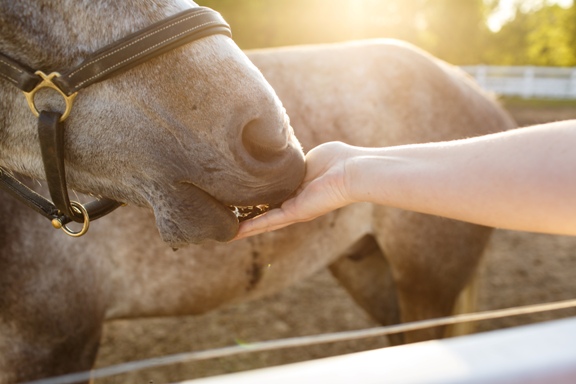
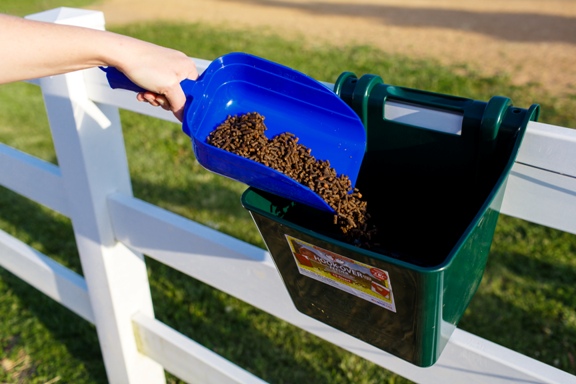
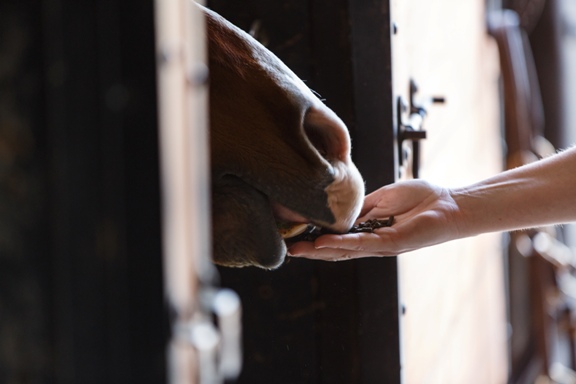
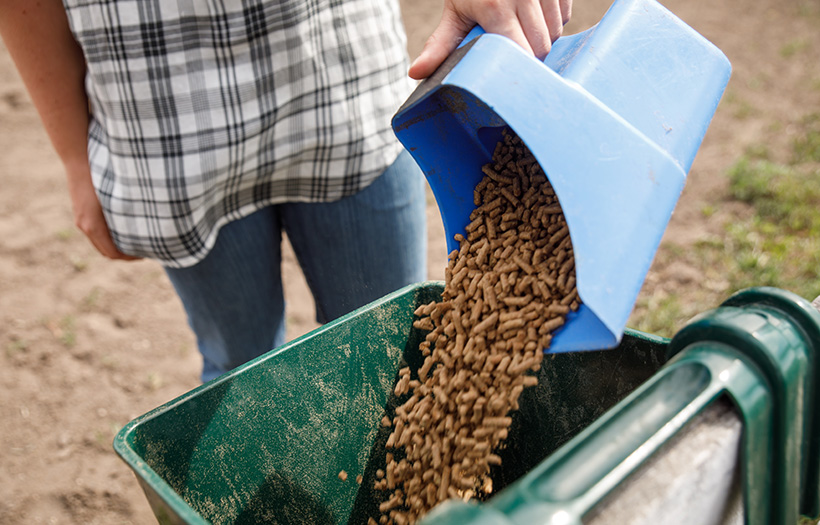
A good option to maintain year around salt intake is to offer loose salt available free choice, either in stalls or in a covered mineral feeder.  Salt intake from loose salt has been observed to be higher than from salt blocks due to the ease of consumption.  When purchasing loose salt, ensure that you are selecting salt that is intended for animal consumption (NaCl, iodized table salt, plain white salt), and not a mineral salt blend (red salt), or salt that is intended for de-icing. 

If horses are salt starved, it may be a good idea to limit the amount of salt put out for them until they have adjusted their intake.  It is essential that fresh clean water at an appropriate temperature be available at all times as well. 

Commercial feeds normally contain 0.5-1.0% salt, so horses on this type of feed will typically consume less free choice salt than horses not receiving salt in their feed.  They may still benefit from having loose salt available free choice.  A salt block is better than not having any salt available free choice, but may not be as effective in maintaining salt intake in cold weather or when high intakes are required in hot weather.

Providing salt free choice is a good management tool that can help your horse eat and drink well all year long!

This entry was posted in Care and Management, Feeding Management, Horse Nutrition, Supplements, Weather-Related Feeding.
Tagged as , , , , .

32 Responses to Feeding Salt to Horses

  1. Hannah Newcome says:

    What are your thoughts on the use of Himalayan Salt for horses? Is it utilized as efficiently by horses as it is by humans? Is the price difference worth the investment?

    • Roy J. says:

      Hello Hannah, Thanks for the question. I would expect Himalayan salt to be used as efficiently by horses as it is by humans, but because horses receive a diet that is much less processed than human diets, the benefits from the trace mineral content might be very limited and would probably not justify the investment.

      Another factor to consider is that given the much higher carbon footprint and cost of the true Himalayan salt from Pakistan, I would suggest using a local salt source for horses. If an unprocessed natural source is desired, Redmond salt out of Utah is widely available and is OMRI approved.

      Regards, Roy J.

  2. Debi says:

    At the risk of sounding totaly green about feeding and care of horses, I’m very confused, I keep a mineral block available all year as the Sun comes out it warms and they are eating chunks instead of just licking this is 3 to 4 times per day. Living in a small town, asking the teen behind the counter at feed store, well they try. What exactly am I asking for? Do they need the white salt block also with the Mineral (red) block? Can ya straighten me out Plz Doc? Thank You they are stalled at night.

    • Emily L. says:

      Hi Debi – Thanks for asking, and don’t ever worry about sounding “green” – we are here to help!

      In regards to your question, it sounds like the horses may be trying to make up for deficiency in their total diet by consuming chunks of the mineral block, or it may be simply that they are bored out in the pasture and chew on the mineral block to stay busy.

      To ensure that the first option is not the case, make sure the total diet is balanced. I generally recommend white salt (block or loose in the warmer months, and loose white salt in the colder months). The red mineral blocks, if consumed rapidly or in large chunks, can cause dietary imbalances when considered in the context of total diet (forage, concentrate, mineral block). If the horses are on a commercial concentrate and forage, AND assuming that you are feeding them by weight at the recommended feeding rate, the horses should not need the extra minerals provided in the mineral block, just free choice access to white salt and of course fresh water (above 40 degrees F) along with the rest of their diet. They should not need both the mineral block and white salt.

      Please let us know if you have further questions! Thanks ~ Emily L.

    • Roy J. says:

      Hello Debi, Great question and does not sound totally green about feeding horses! Here’s a little further information you might find helpful:

      Horses really do not like to lick salt blocks in the same way that cattle will lick the blocks. Their tongue is just not well adapted to lick a hard surface, particularly if the surface is cold. If they are not getting salt in their diet from other sources, they are trying to consume a couple of ounces a day and have probably decided it is more comfortable to bite the block than it is to lick it. I have seen this with a number of horses over the years. You might want to offer some loose white salt and keep an eye on consumption. If horses are a bit ‘salt starved”, they will consume extra salt for a few days. As long as they have free access to water that is 45-50 degrees, that is not a problem.

      There are a lot of different types of mineral blocks. If you are using a trace mineral salt block, it is probably still 96-98% salt. If you are using something like a 12:12:12 mineral block (12% salt, 12% calcium, 12% phosphorus), the consumption rate will be different than a regular salt block. Other mineral blocks may contain other nutrients and are softer than straight salt blocks.

      Regards ~ Roy J.

  3. Chuck says:

    Did you mean ounces by weight or onces by volume?

    Thanks!

    Chuck & Kids

  4. Mindy says:

    I’ve tried the big salt blocks in every different combination and what I’ve found cleanest, easist and most likely for me to maintain is the smaller size block in their feeder. They are in at night to eat and they have it, feed, hay & water all available at their leisure all night. I can tell over time that they are licking at them and at least getting some extra salt…

  5. Rose says:

    My vet recommended adding a teaspoon of Lite Salt to my horses grain during the winter to ensure they are eating some salt on a daily basis.

  6. Judy Bixler says:

    I have both mineral and white small salt blocks in buckets in the horses stalls, but in winter they don’t use them much so I add a small amount of loose white salt in their grain twice a day. They have heated water buckets and drink plenty of water when I do this – more water than if I don’t add the salt. The loose salt I have is salt and something called prussiate sodium – feed store said this was fine; designed for people – so I assume its OK for horses?

    • Emily L. says:

      Hello Judy,
      Prussiate sodium has several names (Sodium ferrocyanide, tetrasodium hexacyanoferrate or sodium hexacyanoferrate(II)). It is used for several industrial purposes and as a food additive as an anti-caking solution, but it is not the same thing as table salt. This compound turns blue when combined with iron and is the main component of Prussian blue dye, hence the “Prussiate” part of the name. It is not overly toxic unless consumed in large quantities, because the cyanide ligands are tightly bound to the metal in this compound. It is likely in the salt you are using at very low quantities, as an anti-caking agent. If the label indicated that it is feed-grade, or intended for animal consumption, then it’s likely fine for your horses. You can usually find a % inclusion or order of inclusion on the product tag if you would like to double check. If you have any doubts, plain white salt provided free choice to your horses along with fresh water is what we recommend.
      Thank you ~ Emily L.

  7. Ann says:

    My horse is very mouthy,but he still does not lick the salt block I have much at all. I figured that meant he didn’t need the salt, but you are saying that may not be true. Is it OK to use normal plain human table salt or a coarser Kosher salt free-choice? I only have one horse, and hate to buy a big bag of livestock salt.

  8. Marianne Henze says:

    If you test your hay, which is relatively inexpensive, you will know exactly what and how much to feed; $26.00 through http://www.equi-analytical.com, you can clearly see how much salt your horse needs on a daily basis. We supplement our herd (mini to a 15.3 gelding) with anywhere from 3-12 ounces respectively. We buy salt from our feed dealer and it is very inexpensive. They eat just as much in winter as in the hot days of summer. We also provide white salt blocks for them in their barn. Be careful of mineral blocks, if you are in an iron heavy area (as we are in northern Illinois), horses can tend to be iron-overloaded. White salt is best and supplement major and trace minerals based on your hay analysis.

  9. Lori Nelson says:

    Where does the Redmond salt fit in? Would it be like feeding white salt or like a “red” mineral block? If I am feeding the Redmond salt free choice, should I still be feeding the white salt?
    Thank you,
    Lori

    • Gina T. says:

      Hello Lori,
      I looked up the Redmond Salt online since I wasn’t familiar with it, but it appears to be a “natural” form of salt with a few trace minerals in it. Looking at the guaranteed analysis, it might look like you are getting a high amount of some of the trace minerals, but when you do the math based on how much a horse will take in – only a few ounces a day – it should not interfere with the rest of your feeding program, and it is a perfectly good source of salt (NaCl, or the sodium chloride we’ve been talking about) for your horse.
      Thanks ~ Gina T.

  10. Karen says:

    My horse is a 26 year old half Arab with Cushings. She is on Pergolide, gets grass hay, no pasture, one pound Safe Choice a day and seems to be in good shape. What type salt would be best for her, if any? I do have a small salt block in separate feed container, but really cannot tell you what kind it is except the color is brown, apple flavor. I am also going to start the supplement Smartflex Senior from SmartPak for the winter.
    Thanks, Karen M.

    • Roy J. says:

      Hi Karen, Thank you for your question about your mare.  You are correct to offer salt to her free choice.  There are a couple of good options.  Plain white salt or a general trace mineral salt will both work well.  I prefer to offer loose salt rather than a salt block as horses do not as readily lick salt blocks as say cattle do, particularly in cold weather.  You can put the loose salt in a small feeder in a stall or sheltered area. You would expect your horse to consume 1-2 ounces per day, more in hot weather.  If loose salt is not feasible, then offering a salt block is also a good option.

      As your mare does not get any pasture and is only getting one pound of SafeChoice per day, you might want to consider using Lite Balance or Empower Balance instead of SafeChoice as they have a higher concentration of trace minerals and vitamins for the limited amount fed.  If she starts having any problems chewing forage, Life Design Senior is a good option and is commonly used for older Cushing’s horses with great success.
      Please let us know if you have any further questions!
      Roy J.

  11. Jenn says:

    I am looking into feeding a loose salt by American Stockman. I want to mix it into their grain but I am not sure how much to give them. I have two mares that eat together out of the same feeder so it would have to be divided as equally as I could.

    Thanks, Jenn

    • Roy J. says:

      Hi Jenn,

      Thank you for your question regarding feeding loose salt.  You are doing the right thing to offer salt and you do have a couple of options.  Maintenance horse require 1-2 ounces of salt per head per day and easily twice that in hot weather.  Horses will self regulate their salt intake if salt, particularly loose salt, is offered free choice.  If you fasten a small container in your feeder that you could keep supplied with loose salt, you mares could consume the amount they need on a daily basis and you would not need to mix it into their feed and they could adjust intake according to individual requirements. If the horses have not had salt available, they may consume more for the first few days and will also drink some additional water.

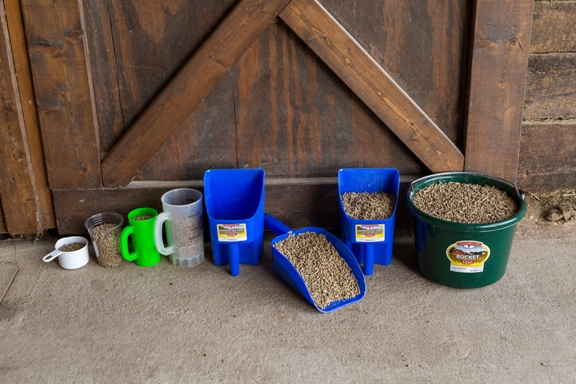
      If you prefer to mix the salt in, you could add 2 ounces per head per day.  You can use a diet scale or a postage scale to weigh the salt so you know how much you want to add.
      Regards, Roy J.

  12. Pingback: Your horse ate WHAT? | The Feed Room

  13. crystal says:

    I have two one year old horses is it ok to give them a salt block or a mineral block?

    • Gina T. says:

      Hi Crystal – Great question! Yes, horses of all ages should have salt available free-choice to them. Make sure they also have free access to water. They may consume a fair bit when you first introduce a block to them, out of curiousity mostly, but you should see that taper off within a few days.
      Thanks ~ Gina T.

  14. Pingback: Salt for Horses in High Temps | The Feed Room

  15. Linda Berke says:

    I just bought a salt block but when I went to put it out for the horses, I noticed the label said Brine salt for water softener. Is that OK to feed to the horses? thanks

    • Roy J. says:

      Hi Linda,
      The block you purchased that was labeled Brine Salt for Water Softner will be OK to feed your horse. It should be chemically the same as a white salt block for horses. There are actually some white salt blocks in the Champion line that are labeled for both uses.

      It is always best to purchase products that are specifically labeled for the intended use, so you should probably buy a salt block next time that is either labeled specifically for livestock or labeled for both livestock and water softners.
      Roy A. Johnson

  16. sharie penney says:

    My barn owner manager took my himalaytan salt block out of his stall stating it could do kidney damage , what do you think?

    • Roy J. says:

      Hello Sharie, Thank you for contacting us. Himalayan salt is being sold in upscale stores for human consumption, and I have not seen any recommendations that there are any risks to horses. The only concern that I can see someone having is if they have reasons to believe there are more heavy metals or other elements in this salt source, but I have not seen any data to that effect.

      It might be possible that your barn owner/manager might have noticed increased water consumption and urine output, if the horse is consuming more salt than normal, and think that was a kidney issue. This can happen, particularly if the horse was salt deficient, then is offered a very palatable salt source such as the himalayan salt block.

      Regards,
      Roy

  17. Uli says:

    I have a 1800lb shire horse, 10 years old. I keep a 10lb red mineral salt block in his stall and he can lick on it whenever he wants…he goes through one of those blocks in about 6 months…I always thougth he’d like it when he needed it. Now my sure asked me about his salt intake, because my horse pees about twice during a one hour shoeing session….and he pees a lot….but he is a big horse too. Whe I go trail riding, regardles of the length of time of the trail he also pees about twice….I feel that he is fine, he drinks a lot too, which I consider a good thing, he drinks about 25-50 gallons of water a day depending on how hot it is….He is healthy and in good shape, happy, playful and loyal….Does this sound like he eats too much salt as my shoer suggested as a reason for his pee habits?
    Thank you for your time and maintaining this blog :0)
    Sincerely,
    Uli

    • Roy J. says:

      Hi Uli,

      Thank you for your interesting question about your 1800 lb Shire and his consumption of the red mineral salt block. If you use a 10 lb block and he consumes that block in about 6 months, that would mean he is consuming about 160 ounces of salt (10 lbs x 16 ounces per lb) in about 180 days. This would be less than 1 ounce per day of this salt, so that would not be an indication of over consumption of salt. A mature horse will normally require 2-4 ounces per day of salt to maintain sodium and chloride balance in the body, depending on temperature and work. If you are feeding a manufactured feed, that may contain some salt also, which would help meet your horse’s daily requirement.

      The type of forage and feed that you are feeding may also impact your horse’s pee habits. If you are feeding a forage and feed that provide more than about 10-12% total protein in the diet (Hay plus feed combined), the excess protein is used for energy and the extra nitrogen is excreted in the urine. We see this with horses on high alfalfa hay diets. This is not harmful to the horse, but will cause the horse to drink a bit more water and produce a bit more urine.

      If your horse were a few years older, I would also be keeping an eye on him for any other signs of Cushing’s Syndrome. One of the symptoms there is excess drinking and excess urine output. Pretty uncommon in a horse as young as he is at this time.

      I would keep offering him the salt block and keep him drinking normally.
      Thanks ~ Roy J.

  18. Peter says:

    Hi

    Sorry for may be stupid question, but why horse needs mineral salt? I clearly understand, that any creature alive needs different ions, also sodium and chlorine ions. They are very important. But grass, leaves, oats all these green plants around ready to be consumed are rich of all necessary elements essential for horses. In plants these ions are in more convenient for consumption compounds, than in mineral salt. For cows there is commercial interest in feeding extra salt. Salt causes extra thirst, which causes extra drinking, which results in more milk, which results in more $$. For industry the health of cattle is second item. I guess horses is different case.
    From other side. Who supply animals in wild with necessary ounces of salt every day? Wild horses, does, deer, elks. I assume they have similar food base. Yes, i know, nowadays it is popular for humans to spread salt blocks around in wild pastures, it is argument. But one hundred years or more ago nobody supplied salt to wild, but, surprisingly, animals were healthy, mostly.
    If I am wrong, please correct me.

    In many countries there are campaigns to reduce salt consumption to reduce high blood pressure problems caused by too much salt eaten. (Salt production companies do not agree with this statement. Guess why?) OK, this is for human salt consumption and my be can not be addressed to horses.

    Regards
    Peter

    • Gina T. says:

      Hi Peter, Thank you for your interesting question regarding salt.

      Salt is the one of the only minerals that horses will seek out and look for in their natural environment. Natural forage and cereal grains/grasses are quite low in sodium and chloride as well as some trace minerals. In the wild, horses, and other wild animals, would seek out natural salt licks, areas where there were salt outcroppings or where high salt concentrations are present. In the process, they would also consume other minerals. They would also chew/consume bones as a mineral source, which is why bones of dead animals or shed antlers disappear in the wild. Horses in their natural habitats, primarily grassy plains, do not routinely do forced exercise which results in sweating and loss of electrolytes, and would be expected to have perhaps lower salt requirements to maintain ion balance than horses which perform work. The salt requirement increases as horses sweat. Domestic horses are not allowed access to natural salt licks and are also exercised more in conditions which encourage sweating, so they need to be provided access to a salt source. If they do not have this access, they may develop unusual eating habits and consume dirt, chew on trees, fences or other horse’s manes and tails Unless they have been salt starved, horses will normally not over-consume salt. If they are salt deprived, they will consume an excess for a few days until body equilibrium is established. If salt deprived, they also need access to free choice water while they are adjusting.

      Commercial diets do contain added salt, but are not overly fortified as excess salt may cause the horses to decrease feed intake. When salt is used in mineral mixes, it is actually an intake limiter. Trace mineral salt contains very low levels of trace minerals and mimics what the horses might consume from natural salt licks.

      I saw an interesting documentary some time ago showing the deeply worn trails that elephants and other wild animals followed in a plains region of Africa to a source of salt/minerals. Native Americans and early settlers also hunted at natural salt licks as they attracted animals.

      Excess salt does increase water consumption, which also increases urine output, but does not effectively drive milk production.

      Human taste for salt is quite a bit different than the natural drive in animals to seek salt to maintain diet balance.

      Who knows, if humans had to seek out salt licks or eat bones, might be less high blood pressure?

      Roy A. Johnson

Leave a Reply

Your email address will not be published. Required fields are marked *

*

You may use these HTML tags and attributes: <a href="" title=""> <abbr title=""> <acronym title=""> <b> <blockquote cite=""> <cite> <code> <del datetime=""> <em> <i> <q cite=""> <strike> <strong>

PLEASE NOTE: By clicking "POST COMMENT" above, you agree that you've read our online privacy policy.