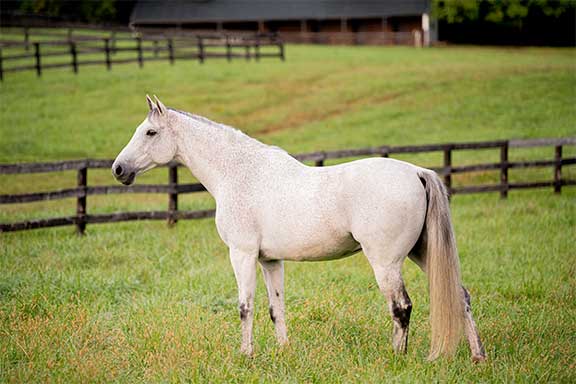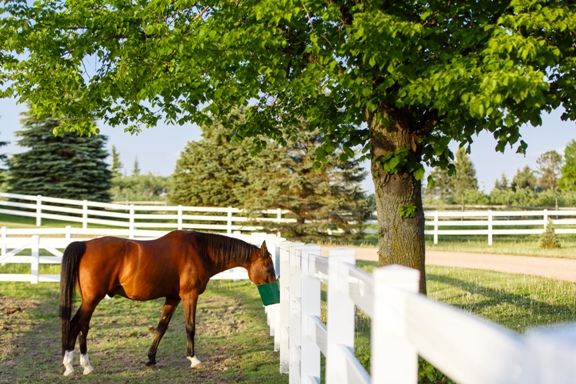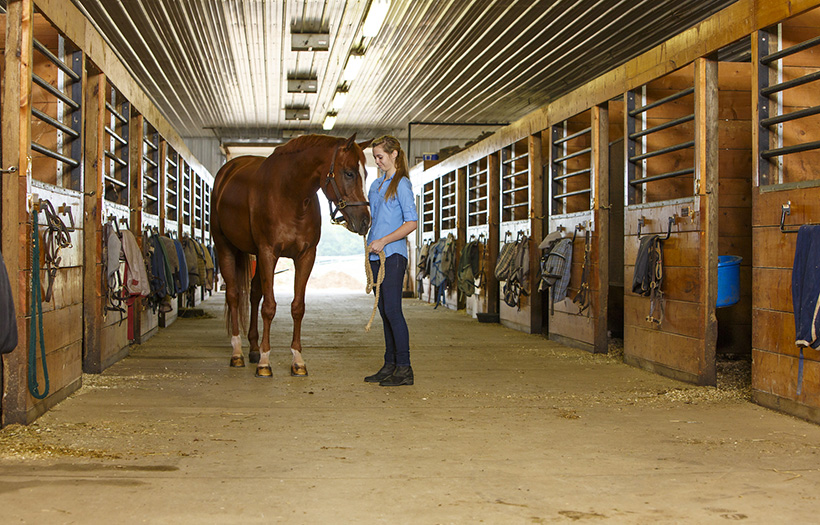
I recently visited a horse owner that wanted to know when it was time to start feeding senior feed to her horse. She currently had him on a 10% protein sweet feed mix. She said he was underweight and not sure why, as she was providing the horse about 20 pounds per day, but he was not eating it all. I explained that we often begin to watch horses for signs of being a “senior horse” around age 15-18. Some may go much later in to life before showing signs, but somewhere in this age range is when we watch for signs of decreased muscle mass, decreased quality of hair coat, and an inability to maintain weight on their “normal” diet.
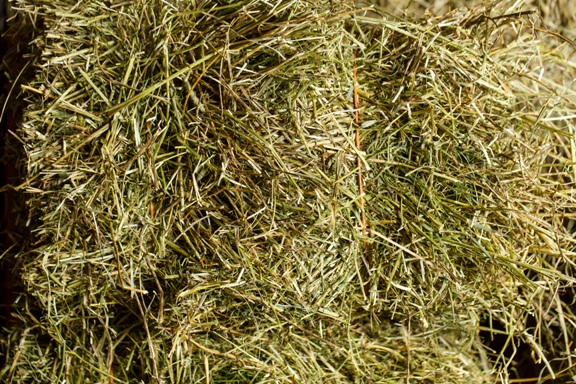
With this horse, I found small clumps of chewed hay on the ground around his feeder, or “quids” as they are called. This happens due to dental deterioration or loss, which inhibits the horse’s ability to chew his hay. Upon examining the horses manure, we noticed a lot of undigested grain. I suggested that the owner have the horse’s teeth floated, as well as have blood work drawn to check for Cushing’s or other metabolic issues. Once the horse’s teeth were taken care of, and any metabolic issues ruled out, we could move toward a more suitable senior diet.
As horses grow older their ability to digest feed and absorb nutrients becomes less efficient. Senior horse feeds will generally have the following elements to make sure older horses are receiving all the nutrition they need:
- Increased protein level in order to provide proper amino acids, such as lysine and methionine, for metabolic functions, muscle maintenance and hoof quality.
- Elevated fat content to provide extra calories, with the benefit of Omega 3 and Omega 6 fatty acids.
- Yeast cultures & direct-fed microbials (more commonly known as prebiotics and probiotics, respectively) to support nutrient digestion.
- Organic trace minerals that are more highly bioavailable than traditional trace mineral sources.
- Enhanced calcium and phosphorus levels to help guard against bone demineralization.
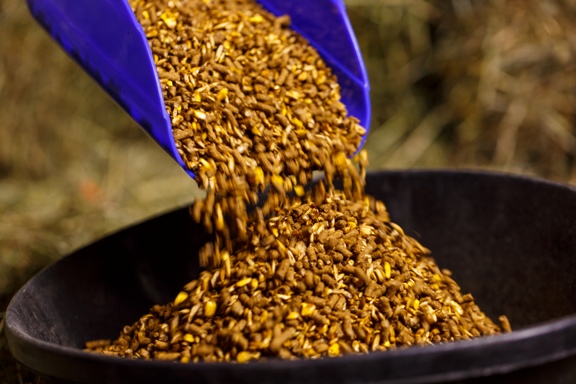
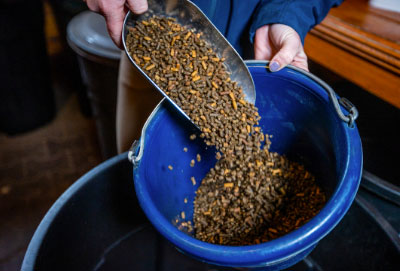
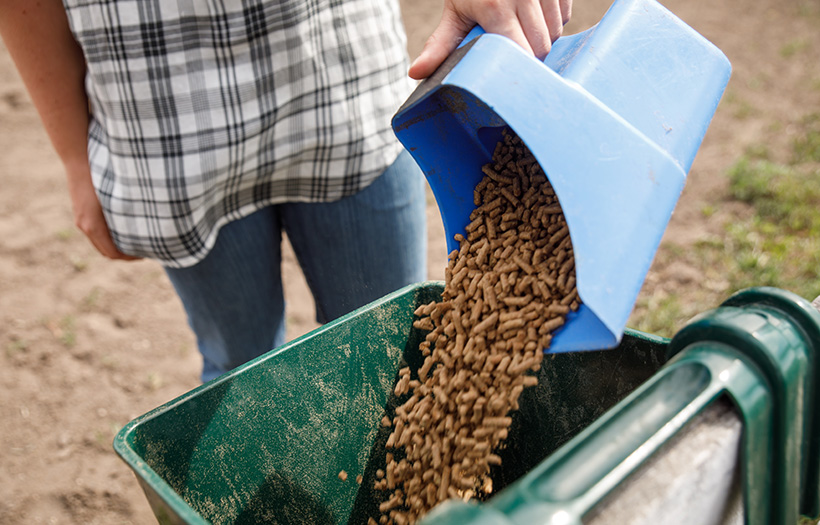
- Manufactured as a soft, high fiber pellet that is easily chewed. In cases where dental loss is extreme, the feed can even be mixed with equal parts warm water to form a mash.
Also, with senior feeds, if the horse is unable to chew any hay, the diet can be adjusted to 4 or 5 feedings of senior feed per day, to meet caloric requirements.


My horse has cushing disease. He is 31 years old and is just this year losing weight and muscle tone. What and how much should I be feeding him. His teeth are detorating, which I think is normal for his age. Please advise. Thanks so much.
My horse is 31 years old. He has cushings disease. He is starting to lose muscle tone and his teeth are detorating. What and how much should I be feeding him. I would appreciate any help you can provide. Thanks
Cushing’s syndrome horses require a hay or pasture source that is low in Non-structural carbohydrates (NSC), so you might want to have your forage tested. They do well on senior feeds that are fortified with lysine, methionine, biotin, vitamin E and organic trace minerals (copper, zinc, manganese and selenium) to help maintain muscle mass, support hoof growth and support immune response. Feeding directions need to be followed to make certain enough Senior feed is being fed as these older horses may not be able to utilize forage very efficiently. If your horse is not maintaining weight, you may need to increase the feeding rate of the Senior feed or add a low starch, rice bran based high fat supplement.
Thansk! ~Roy J.
I have a 37 year old quarter horse…we feed him twice a day with one half a scoop of Senior Chow, one scoop of soaked alphafa cubes, one scoop of beat bulp, one scoop of grain, however now that he is off the summer grass he has lost weight.
How should we be feeding him…more frequently? A scoop is a LARGE scoop…3 cups.
Good question! 37 years old is quite amazing – and at this age, it’s not surprising, unfortunately, to see him start to have a little more trouble keeping up. I would suggest a couple things – one would be to weigh your feed and know how much he is actually getting (and if you are within the recommended amounts on the feeds you are giving) and two would be to simplify your program.
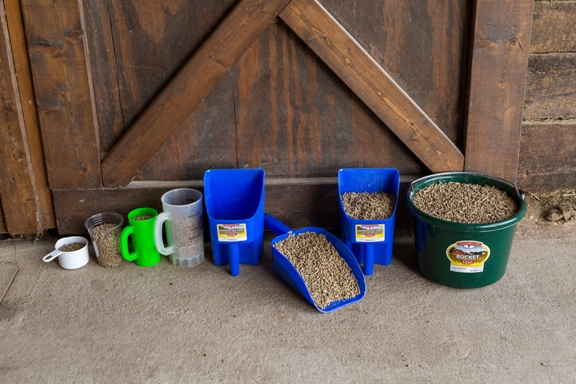
To weigh your feed, get your bathroom scale or a small fish scale or something along those lines, and weigh out exactly how much you are giving of each. Then, compare that to the feeding directions on the tag of the feeds you are giving. 3 cups really won’t likely weigh out to alot of each feed, and you may not be providing enough calories.
To simplify, I would suggest you phase out the “grain” you are feeding and transition that to the Senior horse feed. The senior feed will provide more calories and nutrition per pound, and depending on the brand you are using, may also provide more roughage to help take the place of the grass he is no longer getting. Might suggest the same of the beet pulp – there are some hidden dangers of feeding beet pulp as a plain ingredient, and if you use a senior feed like the one made by Nutrena, our Life Design Senior, it’s actually already included in the feed and the mineral imbalances of plain beet pulp are accounted for and balanced out with other ingredients.
Once you’ve made those adjustments, ensure again that you are feeding enough according to the feed tag directions, and then you may simply have to increase the amount you are giving him. That may be as simple as adding another 1/2 lb to 1 lb per feeding, or adding another feeding session in to the day. Please let us know if you have more questions or if we can help any other way! Thanks ~ Gina T.
Ideas on teeth floating seems to be alot of theories on this even as early as two years of age jaw and teeth aren’t fully developed if power floated too young & too often seems this would be problem as horses age any thought on this? I see horses having digestive problems as you note But seems there teeth are worn down by power floating more than normal wear. Thanks J.R.
Hello J.R. – Excellent question. Dental care for horses has changed greatly in recent years. There is greater awareness that young horses can develop problems with their deciduous teeth that may require attention before the permanent teeth start coming in at age 2-2.5. These “baby teeth” can develop sharp points or have malocclusion problems (improper alignment) or fail to shed properly. Once all the permanent teeth are in, generally by age 5, abnormal alignment or wear creating sharp points on the outside of the upper molars and inside edge of the lower molars are the most common problems and may be accompanied by hooks at the front or rear edge of the cheek teeth.
The use of power floats has made it possible to do a more thorough job of taking care of the edges or hooks. Unless there is a problem with a “wavy mouth”, the actual grinding surface is normally NOT altered during the dental procedure as only the improperly worn edges or hooks are smoothed out. This is one of the cases where if a little is good, more may NOT be better.
A good recommendation is to check a foals mouth carefully at birth, then check every 6 months. If a horse shows abnormal eating/drinking behavior or demonstrates resistance in bitting or training, a thorough dental exam may be useful.
Floating or other dental procedures should be done by a qualified veterinarian or equine dentist to avoid excessive or improper use. State regulations may govern who can perform dental work.
Regards,
Roy J.
In are area Idaho we have a lot of problems with sand colic ..I always have people do a stool sample 8 balls put into zip lock add half full water let soak and feel for sand in corner of bag any thing over 1/2 teaspoon then we use sand clear to flush sand out ..horses coats look dull and have problems gaining weight low energy
Hello Candice, You are correct, the procedure described is useful in determining if the horses are ingesting sand and are at potential risk of sand colic. Ingesting sand could cause some reduction in digestive efficiency, but I would be more likely to look at nutrition level to address problems of gaining weight, low energy and dull hair coat. If they have problems gaining weight, I would be checking to make certain teeth are OK, deworming is in current and Calorie intake is adequate. (As an aside, horses that are grazing and ingesting sand may also show a little more dental wear.) Dull hair coat may reflect inadequate amino acid and trace mineral intake. Balanced diet with added oil can be useful.
Hope this helps! ~ Roy J.
I have a 24 year old Tenn Walker. He’s always been an easy keeper and is pasture kept. Every winter, he puts on a very, very thick coat. (thicker than any I’ve ever seen) This past winter he lost quite a bit of weight, and then coming off of winter he choked. After this, he didn’t eat or drink for a few days, adding to the weight loss. I’ve spent a couple of months trying to “fatten” him back up. He was at about a 2.0 on the Henneke score. He’s been on Senior feed for a few years now, but only once a day. Since this happened, I’ve been feeding him twice a day. 2 cups of alfalfa cubes, (shredded), 1 scoop of Legacy pellets, 2 large scoops of Senior pelleted feed, 1/2 cup of vegetable oil. I then fill the bucket up with water, pour it into his feeder and add 1 1/2 cups of calf manna. Needless to say, he’s put a nice amount of weight on. He’s probably between a 3.0 and a 4.0 on that same scale now. (and has a beautiful, shiny coat). Do you think that I’m over reacting? Is this a balanced amount of protein and fat calories ? Now that he’s gained a good bit of his weight back, at what kind of rate do I need to start backing off of this stuff at ?
I’ve always been told that calf manna can be hard on their kidneys so use caution on the calf manna or ask your vet. But it sounds like you are doing everything that you can possibly do.
Pingback: Feeding the Older Broodmare – America’s Horse Daily
Pingback: How to Transition a Horse’s Feed | The Feed Room
Pingback: Laminitis in Horses – What can you do? | The Feed Room
I started my two 17 y/o horses on Nutrina Life Design Senior feed with wonderful results. As feed prices started to increase, I switched to a local manufacturer’s senior feed and within one month noticed a decrease in body condition and weight. Needless to say the $4.00 I was saving per bag was not worth risking my senior’s health. Went back to Life Design Senior and have seen such a difference…actually had to cut back on some the concentrate because they were getting a little chubby. Thanks Nutrina for a great product with consistant milling qualities.
I just wanted to say how Thankful I am for Nutrena Senior! I discovered it many years ago when my little riding pony was 36 and turning into a skeleton. He regained his weight and coat and remained in beautiful form till he passed at 42. It has since been my ‘go to’ for all seniors and rescues. I am currently feeding a 32 yr old toothless wonder pony that doesn’t look a day over 20. He nickers and runs bucking to his feed dish for his Nutrena Senior mash. He can’t wait to jump into the trailer to go give pony rides and I KNOW I owe that to Nutrena. Thank You for making such a nutritious low sugar, healthy feed that I can depend on to keep my horses in prime conditon, and most importantly thank you for the extra years I get to spend with them! (ps. I just switched my dog over from a very expensive ‘natural’ high end dog food to your Loyall brand and my dog is doing even better than before on it)
Our 25 year old arabian & 27 morgan have not looked this healthy going into our Michigan winters in many years. They have beautiful shiny thick coats & have flourished since being on Nutrena Lifestyle Senior feed! How fortunate to have found such a great feed. Thank you!
I have an old quarter mare, unsure of her exact age but pretty sure its mid to late 20s. She lost weight over the winter so I have put her on a mash diet of senior feed, beet pulp and alfalfa pellets. I was told to give her 2 scoops (with a 1 pound coffee can) of the beet pulp and one of the senior feed and 1 of the alfalfa pellets and enough water to make it mushy. i also add 1/2 cup corn oil to this mash. She seems to have put on a small amount of weight but not as much as i would like. She has access to hay at all times but doesnt seem to eat much of it. Only once in a while do i notice any wads of unchewed hay around her feeder and her manure doesnt really have any undigested grains in it. I feed her this diet twice a day and usually a small amount of grain mid day cuz she begs when the calves get fed. (more of a treat than anything) My question is this… How much of each of the beet pulp, senior feed and alfalfa pellets should I be giving her. She has always been a begger and whinies everytime we are outside so I am unsure if she is just asking for more or if she needs more to eat. Someone please advise me
Hi!
You have some very good questions about your horses diet and you are on the right track, we just need to get a few facts to help establish a baseline. First, I would strongly encourage you to weigh your horse.
Once you know your horses weight we need to also determine if any hay is being consumed. A horse should eat at least 1.5 % of its body weight per day in forage. The hay clumps or quid’s you are finding in the stall, tell me forage consumption is not reaching the desired amount.
You are on the correct path, with high fat and fiber for your horse. However, it is done for you in a much more balanced method, if you go with a complete or senior feed. The key in complete or senior feeds is that the vitamins and minerals are balanced for the horse. You will need to feed the suggest feed rate of the product for your horses weight, and you need to weigh the feed. A small food or fishing scale works well, or you can also purchase one on Nutrena World estore.
Also, make sure to read this article that will help you determine how much senior feed your horse needs.
Please feel free to contact me if you have any additonal questions.
Thank you for contacting Nutrena~ Gayle R.